

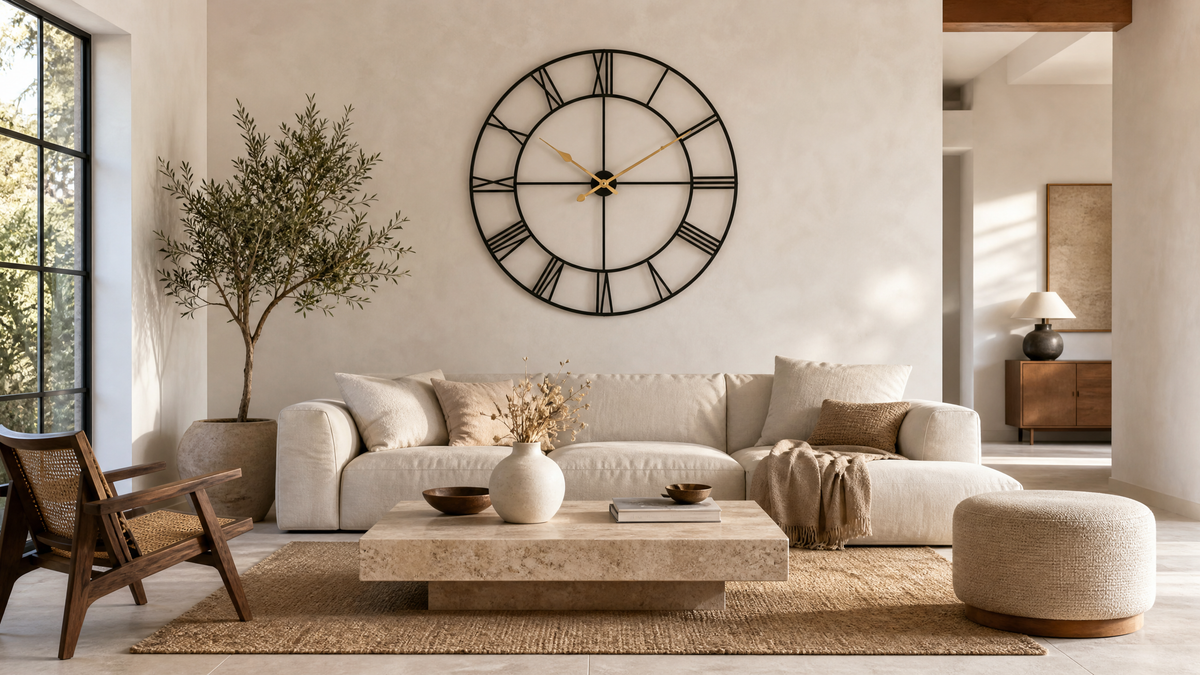
There is something wonderfully satisfying about a beautiful wall clock. It is one of the rare pieces of home décor that is both entirely functional and genuinely decorative — a piece that earns its place on your wall every single day. In 2026, UK homeowners are rediscovering the wall clock in a big way. After years of glancing at our phones to check the time, there is a growing desire to bring something more considered, more crafted, and more personal back to our walls. Today's wall clocks are far removed from the plain, purely utilitarian designs of the past. They are statement pieces, visual anchors, and expressions of personal style that can completely transform the feel of a room.
Whether you are looking for a bold oversized design to anchor your living room or a refined minimalist piece for your hallway, understanding the current wall clock trends will help you choose a timepiece that works beautifully in your UK home.
The Return of the Wall Clock as a Statement Piece
The most significant shift in wall clock design in 2026 is the way these pieces are being used. Interior designers are increasingly treating wall clocks not as background accessories, but as primary decorative elements — the equivalent of a piece of wall art that also happens to tell the time.
This shift is driven by a broader move away from cluttered gallery walls and towards fewer, more impactful pieces. A large, beautifully crafted wall clock above a sofa or console table creates an immediate focal point that draws the eye and gives the room a sense of structure and character. As one interior design expert puts it, "A well-placed clock can function much like a piece of industrial wall art, balancing the surrounding furniture and giving the room a sense of structure and character."
The key to making this work is giving the clock enough breathing room. Resist the urge to crowd it with other frames or accessories. Allow it to stand alone on a clean wall where its form, material, and scale can be fully appreciated. This confident, restrained approach is very much in keeping with the broader aesthetic direction of 2026, which values intentionality over excess.
Oversized Clocks: Scale, Presence, and Impact
One of the strongest wall clock trends of the year is the rise of the oversized design. These large-format clocks — typically 60 cm or more in diameter — are being used in UK living rooms, hallways, and dining spaces to create an instant sense of scale and luxury. They work particularly well in open-plan homes, where a large clock can help visually define a seating zone without requiring excessive additional décor.
When choosing an oversized clock, proportion is everything. As a general guideline, the clock should occupy roughly one-third to one-half the width of the furniture below it. A clock that is too small for the wall will look disconnected and visually weak; one that is correctly scaled will feel purposeful and commanding. For most UK living rooms, a clock between 50 and 80 cm in diameter tends to hit the sweet spot.
Open-frame metal designs are particularly popular right now, as their visual lightness prevents them from overwhelming a space even at a large scale. A matte black open-frame clock above a pale sofa creates a striking contrast that feels modern and considered. For a warmer, more organic look, a large wooden clock in walnut or oak brings natural texture and character to neutral interiors.
Natural Materials: Warmth, Texture, and Craftsmanship
In line with the broader material trends shaping UK interiors in 2026, wall clocks crafted from natural materials are having a significant moment. Warm woods — particularly walnut, white oak, and ebonised ash — are dominating the market, prized for their unique grain patterns and the way they soften the hard lines of modern architecture.
Alongside timber, geological materials are making a striking impact. Clock dials cut from solid travertine, honed slate, or marble offer a heavy, tactile presence that anchors a room beautifully. These earthy, natural timepieces feel deeply connected to the organic, grounded aesthetic that is so central to British interior design right now. They pair beautifully with linen sofas, ceramic vases, and the warm, earthy colour palettes that are dominating UK homes this year.
For those drawn to a more refined, minimal look, clocks with matte powder-coated finishes in deep charcoal, soft alabaster, or brushed titanium offer a sophisticated alternative. These monochromatic designs rely on form, shadow, and negative space rather than bold contrast, making them a natural fit for Japandi-inspired or quietly luxurious interiors.
Choosing the Right Style for Your Home
With so many beautiful options available, it helps to have a clear sense of the style you are aiming for before you start shopping. Here are a few of the most popular directions for 2026.
Minimalist and Monochromatic. If your home leans towards clean lines, neutral palettes, and a sense of calm restraint, a slim-framed clock in matte black, warm grey, or brushed brass will integrate seamlessly. Look for designs with simple baton indices rather than bold numerals, and choose a silent sweep mechanism so the clock adds to the room's tranquillity rather than disrupting it.
Warm and Organic. For homes that embrace natural textures, earthy tones, and a relaxed, lived-in feel, a wooden wall clock is an excellent choice. A walnut or oak design with a clean, uncluttered dial brings warmth and character to a wall without demanding too much attention. Pair it with a few well-chosen ornaments and a simple plant for a beautifully layered, natural vignette.
Bold and Sculptural. If you want your clock to be a genuine conversation piece, consider an oversized, sculptural design that blurs the line between timepiece and art. Sunburst motifs, exposed gear trains, and asymmetrical shapes are all popular choices for homeowners who want to inject personality and drama into their space.
Placement Tips for Maximum Impact
Where you hang your clock matters just as much as which clock you choose. The most popular and effective placements in UK homes right now include above the sofa on the main living room wall, above a console table in the hallway, and on an accent wall in the dining room or kitchen.
In all cases, aim to hang the clock at a comfortable visual height — roughly at eye level when standing, or slightly higher if the clock is particularly large. Avoid placing it too close to other wall-mounted items, as this reduces its visual impact and makes the wall feel cluttered. The goal is for the clock to feel like the clear centrepiece of its wall, with enough negative space around it to breathe.
Finally, consider how the clock's finish relates to the other materials and accents in the room. A matte black clock will look most cohesive in a room that already has black accents — in light fittings, curtain poles, or furniture legs. A warm brass or gold finish will sing in a room with warm lighting and earthy tones. This kind of thoughtful material coordination is what separates a beautifully styled room from one that simply looks assembled.
Time Well Spent
A well-chosen wall clock is one of the most rewarding investments you can make in your home. It brings function, beauty, and a genuine sense of personality to your walls — and unlike many trend-led pieces, a quality clock will look just as good in ten years as it does today.
At Hyggedecor, we believe that every detail of your home should feel considered and intentional. Explore our collection of wall clocks and discover the perfect timepiece to anchor your space. Because in 2026, the right clock does not just tell you the time — it tells you something about who you are.
Share:
Make a Statement: The Top Wall Art Trends for UK Homes in 2026
The Power of the Vase: How to Choose and Style Decorative Vases in Your UK Home