

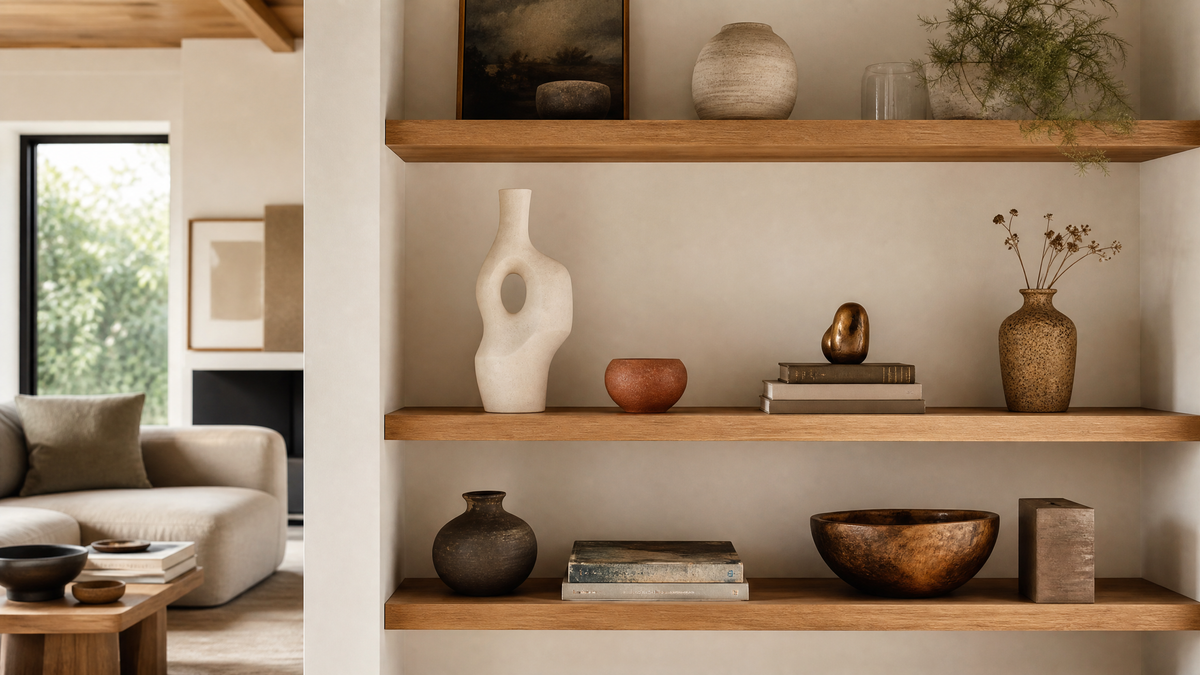
Every beautifully decorated home has one thing in common: it feels collected rather than assembled. The shelves are layered with objects that mean something. The coffee table holds a small sculpture that catches the light in just the right way. The console table tells a quiet story through a carefully curated arrangement of ceramics, books, and natural objects. In 2026, UK homeowners are embracing this philosophy of intentional, personal decorating more fully than ever — and at the heart of it all are ornaments and decorative accessories, the small objects that give a home its character and soul.
This year, the approach to styling ornaments has shifted significantly. We are moving away from the idea of buying decorative objects simply to fill a space, and towards a more considered, "slow decorating" philosophy that favours quality over quantity, meaning over novelty, and pieces that feel genuinely personal. Whether you are starting from scratch or looking to refresh a tired shelf, this guide will help you choose and style ornaments that make your UK home feel truly alive.
What's Trending in Decorative Objects for 2026
The dominant theme in ornament and decorative accessory design this year is a celebration of craftsmanship, natural materials, and sculptural form. UK homeowners are increasingly drawn to pieces that feel handmade, unique, and connected to the natural world — a direct reaction against the mass-produced, perfectly uniform objects that dominated interiors for much of the past decade.
Sculptural ceramics are leading the way. Abstract busts, organic-shaped bowls, hand-thrown vessels, and architectural ceramic forms are all having a significant moment. These pieces occupy the space between functional object and work of art, and they work beautifully as standalone focal points or as part of a layered shelf arrangement. The appeal lies in their imperfection — a slightly uneven glaze, a subtle asymmetry, or a surface texture that shows the hand of the maker. These qualities make a piece feel genuinely special rather than simply decorative.
Bronze and warm metal accents are also defining the ornament landscape in 2026. After years of brass and matte black dominating UK interiors, designers are embracing the softer, more aged quality of bronze. A bronze decorative bowl, a small metal sculpture, or a set of bookends in a warm patinated finish introduces depth and character to a room in a way that feels timeless rather than trend-led. These pieces look as though they have been collected over years, which is precisely why they feel so right in 2026's more personal, layered approach to decorating.
Woven and natural textures are also appearing in decorative accessories — small rattan baskets, woven trays, and objects made from natural fibres bring an organic, tactile quality to shelves and surfaces that complements the earthy, grounded colour palettes dominating UK homes this year.
The Principles of Beautiful Ornament Styling
Choosing the right objects is only half the task. How you arrange them on a shelf, mantelpiece, or console table is what separates a room that feels genuinely considered from one that simply looks busy. Here are the principles that interior designers rely on.
Less is more, but make it count. The most important shift in ornament styling in 2026 is the move towards restraint. Rather than filling every surface with objects, the focus is on choosing fewer, higher-quality pieces and giving each one enough space to breathe. A single beautiful ceramic sculpture on an otherwise clear shelf makes far more impact than a crowded collection of mismatched objects. This does not mean your home should feel sparse — it means every object you choose should earn its place.
Group in odd numbers and vary the heights. When creating a decorative arrangement, interior designers almost universally recommend working in groups of three or five. Three objects of varying heights — a tall sculptural piece, a medium rounded form, and a small, low object — creates a natural visual rhythm that draws the eye through the composition. Varying the heights prevents the arrangement from looking flat or static.
Tell a story. The most compelling ornament arrangements are the ones that feel personal and collected over time. Mix a beautiful ceramic piece from a local maker with a small object picked up on a trip, a treasured heirloom, and a few natural elements — a smooth stone, a dried seed head, a small piece of driftwood. This combination of the new, the old, and the natural creates a vignette that feels genuinely alive and deeply personal.
Mix materials and textures. Combining objects made from different materials creates depth and visual interest. A smooth marble bowl alongside a rough-textured ceramic vessel and a polished bronze figurine creates a composition that rewards close attention. The contrast between different surfaces — matte and glossy, rough and smooth, warm and cool — is what gives a well-styled shelf its sense of richness.
Where to Style Ornaments for Maximum Impact
Shelves and bookcases are the natural home for decorative objects in a UK living room. The key to a beautifully styled bookshelf is balance — alternating between books, objects, and empty space so the eye has room to rest. Avoid the temptation to fill every inch. Instead, create small vignettes within the shelf: a group of three ceramics here, a stack of books topped with a small sculpture there, a trailing plant at the end. The result should feel collected and personal, as though it has evolved naturally over time.
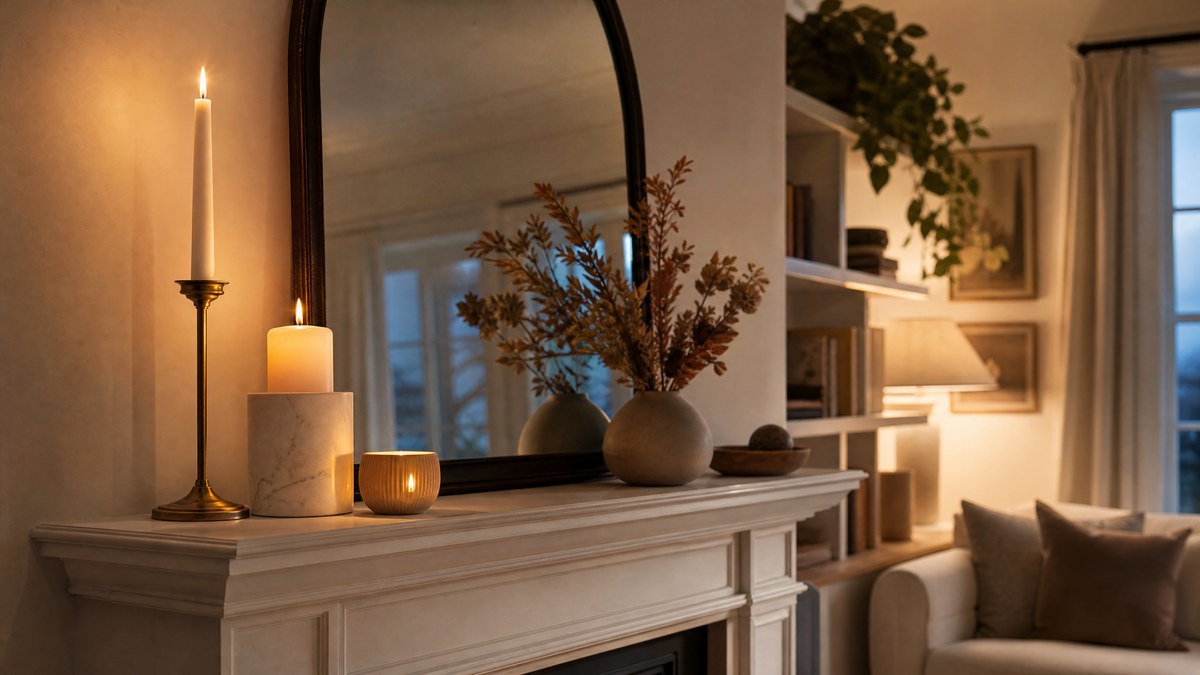
The mantelpiece is one of the most prominent display surfaces in a British home, and it deserves careful attention. A well-styled mantelpiece with a central mirror or piece of art, flanked by a few carefully chosen ornaments, creates a focal point that anchors the entire room. Keep the arrangement relatively simple — a small ceramic piece, a candle holder, and a few natural elements are often all you need.
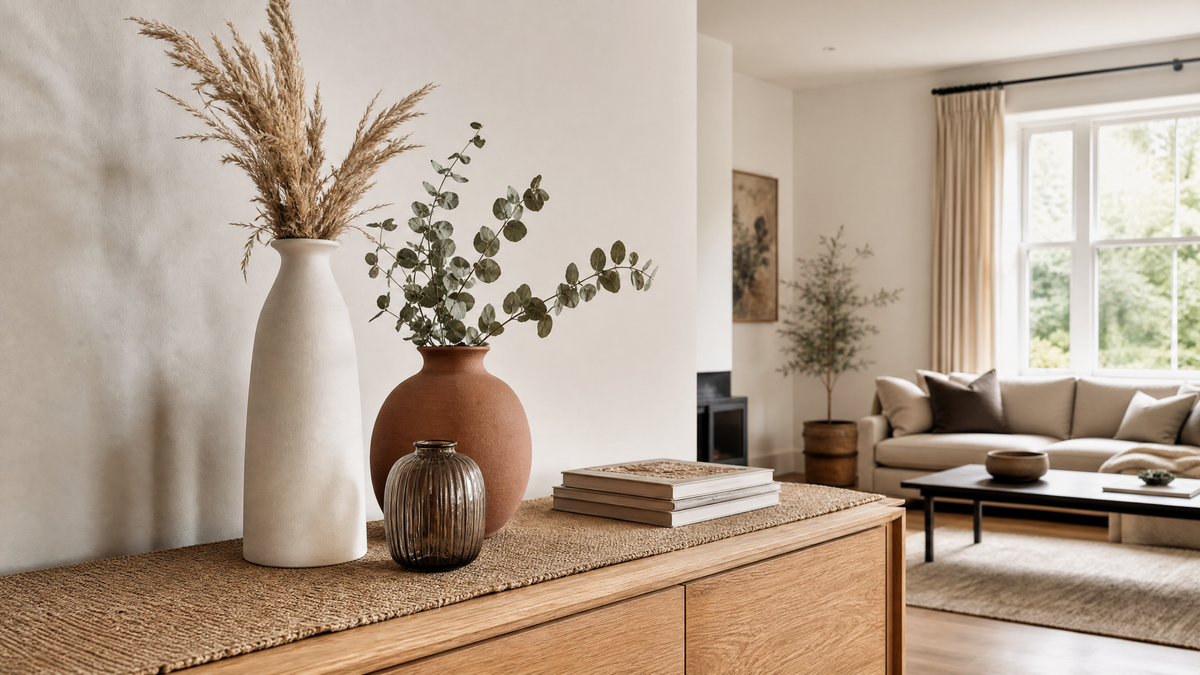
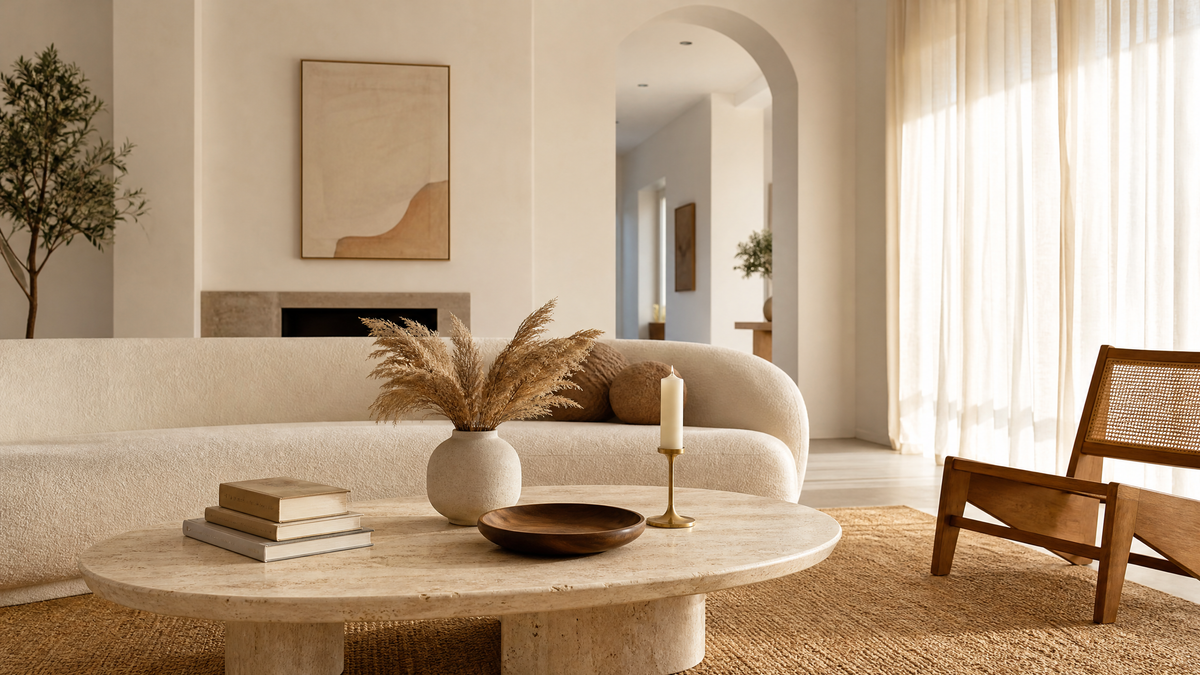
Console tables and sideboards provide an excellent opportunity for a more layered, generous arrangement. A tray to anchor the composition, a group of objects in varying heights and materials, a small vase with dried botanicals, and a few books creates a vignette that feels both stylish and lived-in.
The Slow Decorating Approach
One of the most important ideas shaping UK interiors in 2026 is the concept of "slow decorating" — the practice of building a home gradually, with intention and patience, rather than rushing to fill every surface at once. This approach encourages you to sit with your space, observe how you use it, and add objects only when you find something you genuinely love.
The result is a home that feels layered, timeless, and full of character — the opposite of a space that looks as though it was decorated in a single weekend. Slow decorating also means investing in fewer, better pieces rather than buying many inexpensive objects that you will want to replace in a year. A single beautifully crafted ceramic ornament that you love will bring you far more joy than a shelf full of objects chosen simply to fill a gap.
Finding Your Perfect Pieces
At Hyggedecor, we believe that the objects you choose to live with should be beautiful, meaningful, and genuinely worth keeping. Explore our collection of ornaments and discover pieces that will bring character, warmth, and personality to your UK home. Because in 2026, the most stylish home is not the one that looks perfect — it is the one that feels like you.
Share:
Light the Way: How Candle Holders Are Transforming UK Homes in 2026